
At the outset, decide whether you want to be a trader or an investor, suggest Sarbajeet K Sen and Sanjay Kumar Singh.

The fall came on the back of a massive selloff in NBFCs, led by DHFL which skidded over 50 per cent on fears of a liquidity crisis.

Yes Bank was the top gainer in the Sensex pack, rallying 6.74 per cent, followed by TCS, Tata Motors, Bharti Airtel, M&M and RIL.

Given the various risks to growth, one could argue for rate cuts to be deeper than the 5 per cent terminal repo rate that we are projecting at this stage, says Kaushik Das.

'At this time, staying in the game is more important.' 'If we do that, then wealth can be generated.'

With these repayments, RCom has now fully liquidated the borrowings from 23 foreign banks and financial institutions

The RBI rejection is a second blow to BoB - the lead bank of both companies -- after a Delhi high court order on August 18 stayed a move by BoB and the entire consortium of lenders to classify these accounts as fraud, restraining them from taking any other coercive action till the next hearing.

Infosys, Reliance Industries, TCS, HDFC, HDFC Bank, Maruti, SBI, IndusInd Bank and Kotak Bank led the gains on the Sensex, rising up to 2.53 per cent.

Bankers need to take a call on whether they will allow technology firms to run banks or banks themselves will turn into tech firms, says Tamal Bandyopadhyay.

Banks have taken this aggressive posture even as liquidity has become comfortable on the back of increased government spending.


Sebi has allowed mutual fund schemes the option of 'side-pocketing' which move will help both fund houses and investors.

Resist the temptation to react to every move of the market and remain disciplined with your investments till you reach your financial goal.

A total of 4,452 cases have been disposed at pre-admission stage and 66 have been resolved after adjudication. 260 cases have been ordered for liquidation.

The verdict, upholding Centre's November 15, 2019, notification bringing personal guarantors of corporate debtors under the net of the IBC, assumes significance in view of the fact that various high-profile industrialists may now face insolvency proceedings along with their debt-ridden firms under the IBC.

'Investors should allocate about 5% to 10% to such funds.'

'Rate cut should reiterate RBI's commitment in providing confidence to consumers and small business.'

Typically a high-end product, designed specifically for high net worth individuals, PMS should be looked at after your basic financial goals, and liquidity requirements are adequately taken care of.

Listed realty developers saddled with unsold properties worth Rs 1 trillion

NTPC was the top gainer, spurting 4.28 per cent. Other winners were Bajaj Auto, Bajaj Finance, Sun Pharma, ITC, Hero MotoCorp, TCS, Yes Bank, HDFC, HDFC Bank and SBI, rising up to 1.38 per cent.

The government's predicament is a result of its own doing: That of not ensuring adequate buy-in by the stakeholders before passage of the laws, notes Vivek Gumaste.

Total net debt-equity ratio improves for third consecutive year, while investment in new projects hits a 10-year low, says Krishna Kant.

'Our stable outlook currently points to the fact that the ratings are likely to remain stable for the next couple of years.'

Amid lowering of bank deposit rates and falling yields from traditional investment vehicles like gold and real estate, investors are fast shifting to financial assets. The MF sector is emerging a clear beneficiary of this trend.

Infosys, however, cut 2017-18 revenue growth guidance to 5.5-6.5 per cent from 6.5-8.5 per cent in constant currency.

RBL Bank is no Yes Bank. It's not fraught with fraud. It's a story of limitless ambition and greed for growth under a leader who doesn't want to give up, says Tamal Bandyopadhyay.

Financial services firm AnandRathi analysed the key points of the policy soon after it was announced.
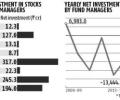
After relentlessly selling shares for most of 2013, India's equity mutual fund managers have turned buyers in the fag-end of the year.

The plan includes step-wise expansion of a crucial credit guarantee net, establishment of an unprecedented number of functional clusters and increased government procurement from MSMEs.

The use of RBI capital to strengthen public sector banks will have many positive implications for the economy -- and a few manageable downsides, points out R Jagannathan.

For now, the concerns over bad loans have taken a back seat; a bigger challenge for the banking community is credit growth, explains Tamal Bandyopadhyay.

Given the uncertainties around gold's future course, stagger your purchases and buy on declines, says Sanjay Kumar Singh.

Booked between 2007 and 2011, out of the total 32,700 residential units under various Jaypee Infratech (JIL) projects, at least 20,000 homes are yet to be delivered. Supreme Court documents show that, till last March, Jaypee had issued 7,997 offers of possession to homebuyers while executing only 6,530 sub-lease deeds. These deeds offer homebuyers possession rights but, unlike registration, does not guarantee absolute ownership.

Slow credit off-take to put pressure on margins

Global liquidity expected to continue amid ECB stimulus

Of these 26, Bajaj Finance, Associated Alcohols and Breweries, Garware Technologies, Filatex India, Tasty Bite Eatables, Aarti Industries and GMM Pfaudler saw an over 10-fold surge in price since 2014.

It has been a year since the Reserve Bank of India (RBI) initiated prompt corrective action (PCA), an exercise that puts weak banks under central bank scrutiny, against the 94-year-old Lakshmi Vilas Bank (LVB). But recently, this low-profile Chennai-headquartered bank found itself attracting some unwonted publicity when 60 per cent of its shareholders voted against a proposal to re-appoint seven directors, including one of the promoters, K R Pradeep (who holds around 2 per cent), and the company's managing director & chief executive officer S Sundar.

Though most experts remain bullish on the banking space, they suggest investors buy only those banks whose NPAs are at a manageable level of 3% to 4% and there is credit growth or earnings visibility.

The Chinese government is imposing severe restrictions on their tech companies - whether it is on data security, marketing practices or floating an IPO. Should this be music to the ears of Indian start-ups and home-grown private equity (PE) funds? Ask Indian start-ups and the answer is a resounding "yes".

In a circular dated May 20, Sebi had directed the listed companies to evaluate the impact of Covid-19 on their capital and financial resources, profitability, liquidity position, assets, and ability to service debt. Instead, companies have spoken about the number of plants, warehouses and distribution centres that have resumed operations; work-from-home and safety measures undertaken for employees; and the labour shortage they are facing.
